Fat-Tire vs Standard E-Bike: Which Tire Width Is Right for You?
2026-08-05 · 6 min read
Fat tires aren’t just a look. Here’s what the extra width actually changes about grip, comfort, flotation and ride feel on soft terrain.
What a fat tire actually does
Fat tires — typically 4 inches wide or more, run at lower pressure — spread contact area over a larger footprint. That extra footprint is what improves grip and flotation on loose or soft surfaces, at the cost of some rolling efficiency on hard, smooth pavement.
The physics behind it is simple: a tire run at lower pressure deforms more under load, which increases the size of the contact patch touching the ground. On a hard surface that mostly shows up as extra comfort, more rubber absorbing bumps, but on sand, snow or mud it’s the difference between a tire riding on top of the surface or digging in and losing traction. It’s the same basic principle that lets a snowshoe or a wide ski keep someone from sinking into snow.
Where fat tires win
Sand, snow, mud and loose gravel are where fat tires shine, along with general stability and a smoother ride over rough, unpaved terrain. They’re a common choice for riders who want one bike that handles varied surfaces confidently.
Where standard tires win
On pavement and groomed paths, a standard-width tire rolls more efficiently, feels quicker to accelerate, and is generally lighter. If most of your riding is commuting or road/gravel routes, a standard-width e-bike will usually feel livelier.
Real fat-tire options at different price points
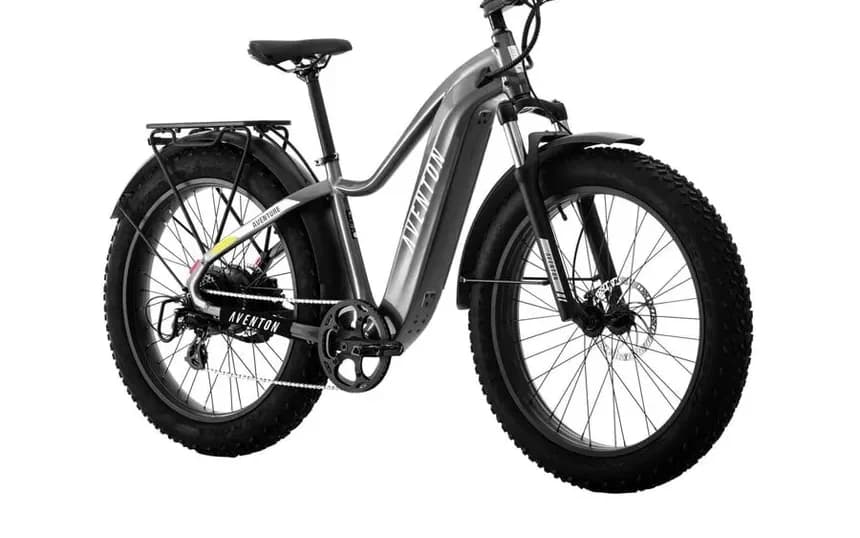
Fat-tire e-bikes span a wide range in our lineup. The Lectric XP 3.0 Fat Tire and Aventon Aventure.2 sit at the more accessible end, Rad Power Bikes’ RadRover 6 Plus and Ride1Up’s Rift land in the middle of the range, and EMORTAL’s Rogue MX-01 Fat Tire Off-Road pairs fat-tire flotation with genuine dirt-bike-style power for riders who want off-road capability beyond a typical fat-tire commuter. Price differences at this level usually come down to battery size, motor power and componentry rather than the tires themselves.
Living with a fat tire day to day
Fat tires need a pump capable of reaching the right low-pressure range accurately, and a standard floor pump gauge isn’t always precise at the single-digit psi levels fat tires run at, so a dedicated low-pressure gauge is a worthwhile accessory. Replacement tubes and tires are also a narrower market than standard sizes, though this has become less of an issue as fat-tire e-bikes have grown more common. None of this should discourage a rider who genuinely needs the traction, but it’s a real day-to-day difference worth knowing before you buy rather than after.
Which one fits your riding
Choose fat tire if your riding regularly includes sand, snow or rough unpaved terrain. Choose standard if you’re mostly on pavement or groomed paths and want efficiency. Riders who face regular winter conditions should also read our cold-weather riding guide for how temperature affects range and traction on top of tire choice. Browse our fat-tire e-bikes or commuter e-bikes to compare.
Keep reading
Next up: Folding E-Bike Buyer’s Guide: What to Check Before You Buy. Or browse the full collection.