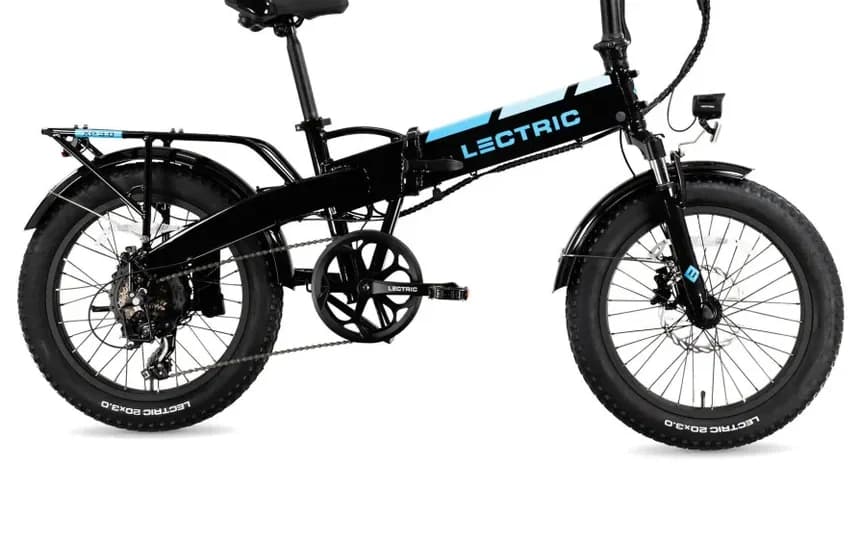
Folding E-Bike Buyer's Guide: What to Check Before You Buy
2026-08-07 · 3 min read
A folding e-bike lives or dies on the fold. Here’s what actually matters beyond the marketing photo — size, weight and hinge quality.
Fold size and weight, not just fold time
Every folding e-bike folds quickly in a demo video — what matters is the folded footprint and whether you can actually lift and carry it. Check folded dimensions against your storage space (closet, car trunk, train, apartment stairwell) and the bike's actual weight, not just a marketing claim of "compact."
Wheel size changes the ride more than people expect
Smaller wheels (16–20 inch) fold smaller but feel noticeably different at speed and over bumps than the larger wheels on a standard e-bike. If you'll be riding longer distances regularly, weigh ride comfort against ultimate portability.
Build quality of the hinge matters
The folding hinge and latch see repeated stress over the bike's life. A well-built hinge should feel solid with no play when locked open — this is one area where cutting corners shows up quickly as an annoying rattle or, eventually, a safety issue.
What separates entry-level folders from step-up models
Our folding lineup spans a real price range, from the Lectric XP Lite 2.0 and Ride1Up Portola Folding at the accessible end, up through the Lectric XP 3.0, Aventon Sinch.2 and Rad Power Bikes RadExpand 5, to the Segway Muxi Folding at the top. The difference isn't usually the fold mechanism itself — it's typically hub motor quality, battery capacity, and component-level parts like brakes and drivetrain that separate an entry-level folder from a step-up model at a higher price.
Battery placement affects the fold and the ride
Some folding e-bikes integrate the battery into the frame's downtube for a cleaner look and lower center of gravity; others mount it externally, which can make the battery easier to remove for charging indoors but sometimes adds a bit of bulk to the folded package. Neither approach is universally better — a removable external battery is genuinely convenient if you don't want to carry the whole bike to an outlet, which matters more for apartment dwellers than it might seem on a spec sheet.
Class rules still apply to folding e-bikes
A folding e-bike is still governed by the same Class 1, 2 and 3 rules as any other e-bike — folding doesn't change what's legal on a bike lane, path or trail. See our guide to e-bike classes before assuming a compact folding model has different access rules than a standard commuter e-bike; the class depends on motor assist type and top assisted speed, not the frame's ability to fold.
Traveling with a folding e-bike
If you're planning to fly with a folding e-bike, check the airline's lithium battery policy before you book — most carriers restrict checked and carry-on lithium batteries above a certain watt-hour threshold, and some e-bike batteries exceed what's allowed without special arrangement. This is worth confirming directly with the airline well before your trip, since policies and thresholds vary by carrier and aren't always obvious from a bike's spec sheet alone.
Who a folding e-bike is really for
Folding e-bikes suit commuters combining riding with transit, apartment or condo dwellers without bike storage, and anyone who wants to stash a bike in a car trunk or RV. If you have dedicated storage and won't need to fold it often, a standard commuter e-bike may ride better for the same money.
Keep reading
Next up: Electric Bike Classes 1, 2 & 3 Explained. Or browse the full collection.