Cold-Weather Riding Tips for Electric Dirt Bikes & E-Bikes
2026-07-31 · 6 min read
Cold weather changes battery range and tire grip. Here’s how to ride smart, stay safe and store your battery correctly when temperatures drop.
Expect shorter range in the cold
Lithium batteries deliver less usable range in cold temperatures — it’s a normal, temporary effect of chemistry, not a sign of battery damage. Range typically returns to normal once the battery warms back up.
The reason comes down to how lithium-ion cells work: the chemical reactions that move charge in and out of the battery slow down as temperature drops, which raises the battery’s internal resistance and reduces how much usable energy it can deliver at a given moment. It’s the same reason a phone battery seems to drain faster in winter. A bike that normally covers a given loop on a full charge may need a partial recharge or a shorter route in freezing conditions, so plan accordingly rather than assuming the range you’re used to in summer.
Warm the battery before you charge
Charging a battery that’s near freezing can stress the cells. If a bike has been sitting in the cold, let the battery come closer to room temperature before plugging it in, especially after a ride in freezing conditions.
Tires and traction change too
Cold pavement and trails offer less grip, and tire pressure drops slightly as temperatures fall. Check pressure before riding in cold weather and ride a little more conservatively until you’ve got a feel for how the bike handles in the conditions.
Consider a fat-tire setup for snow and ice
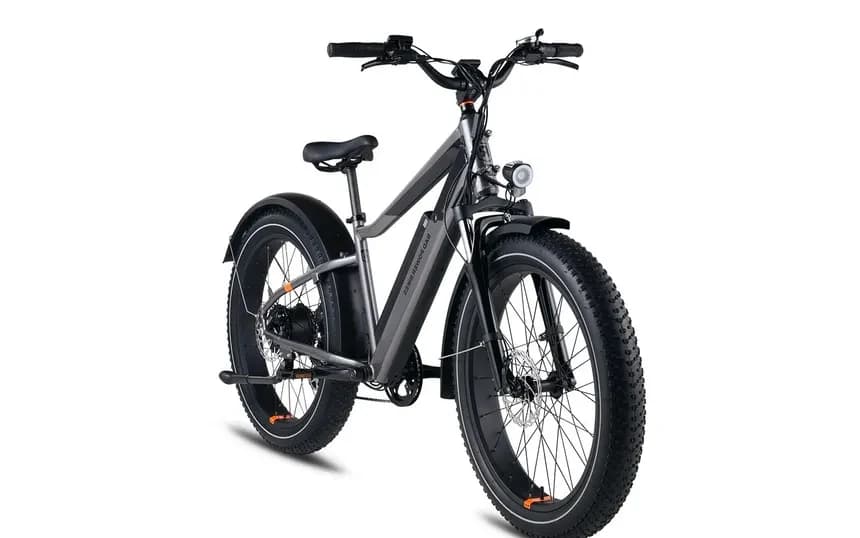
If winter riding is a regular part of your season rather than an occasional cold snap, tire width matters as much as tire pressure. Wide, low-pressure fat tires spread contact area over a larger footprint, which is what improves grip and flotation on loose or soft surfaces like snow, in exchange for some rolling efficiency on dry pavement. Riders who split their year between summer trails and winter conditions often find a dedicated fat-tire e-bike handles snow and ice more predictably than a standard-width tire simply run at lower pressure.
Dress for it, ride for it
Layered, wind-resistant gear matters more on an electric bike than a gas one, since there’s no engine heat radiating toward your legs. Give yourself more stopping distance, and don’t assume warm-weather habits translate directly to a cold ride.
Plan around the range dip, don’t fight it
The simplest way to offset reduced cold-weather range is to start from a higher state of charge than you would in summer, and to trim your planned distance rather than push a bike toward empty in freezing temperatures. If your model has a removable battery, carrying a second charged pack extends a cold-weather ride far more reliably than hoping range holds up. None of this is unique to electric dirt bikes or e-bikes specifically — it’s the same logic that applies to any lithium-powered device used outdoors in winter.
Storing a bike between cold-weather rides
If the bike is going to sit for stretches during winter rather than being ridden daily, avoid the two extremes: don’t leave the battery fully depleted, and don’t leave it at full charge in an unheated garage either way ages a lithium battery faster over time. A partial charge, kept somewhere cool and dry rather than freezing, holds up better through a season of inconsistent riding. See our battery care guide for the fuller picture on charging habits and storage.
Keep reading
Next up: How to Choose a Premium eMTB: Carbon, Motors & Suspension. Or browse the full collection.