How to Choose a Premium eMTB: Carbon, Motors & Suspension
2026-06-08 · 9 min read
Full-power or SL? Carbon or alloy? A clear framework for choosing a high-end electric mountain bike without the jargon, covering motors and suspension.
Full-power or SL?
The first fork in the road for a premium eMTB is full-power versus SL (super-light). Full-power bikes give maximum assist and range for big days and steep climbs; SL bikes weigh less and ride more like a traditional mountain bike with a helpful boost. Your terrain and riding style decide.
The difference shows up most in the motor and battery, not just how the bike feels standing still. Full-power systems pair a stronger motor with a larger battery to sustain that assist over a full day of climbing, which adds real weight to the bike. SL systems use a smaller, lighter motor delivering less peak torque, paired with a smaller battery — some SL platforms offer a range-extender battery as an accessory for longer days when needed. Neither approach is objectively better; it’s a direct trade between raw assist and how closely the bike handles like an unpowered mountain bike.
Carbon vs alloy
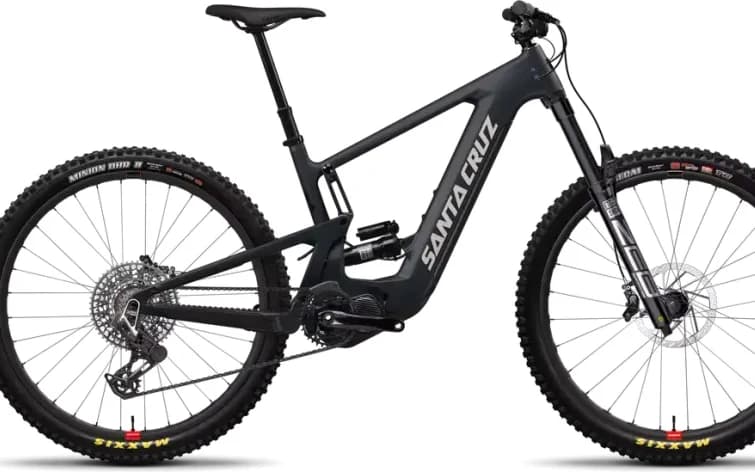
Carbon frames save weight and can tune ride feel, which is why flagship builds from Santa Cruz, Yeti and Specialized use them. Alloy is more affordable and durable. On a premium build you’re usually paying for carbon plus higher-end suspension and drivetrain.
Suspension and travel
Match travel to terrain: trail bikes around 140–150mm, enduro bikes 160mm+. Premium builds pair more travel with top-tier suspension and wireless drivetrains. Don’t over-bike — more travel isn’t always better for your local trails.
What premium actually buys you
At the top of the market, Santa Cruz’s Heckler SL and Bullit, Yeti’s 160E, Pivot’s Shuttle LT and Shuttle SL, and Specialized’s Turbo Levo SL and Kenevo SL represent the segment’s flagship builds, generally running from around $8,000 into the mid-teens for range-topping, wireless-drivetrain spec. What that extra money buys beyond the frame material is usually the suspension tune, the drivetrain (wireless electronic shifting is common at this tier), and finish-level details like carbon wheels or upgraded brakes. A mid-tier alloy build from the same brand often shares the same motor and geometry as the flagship — you’re frequently paying more for the parts hung on the frame than for a fundamentally different bike underneath.
Drivetrain: mechanical vs wireless
Traditional mechanical derailleurs use a cable to shift gears, while wireless electronic drivetrains shift with a small motor at the derailleur itself, controlled by a wireless signal from the shifter. Wireless systems tend to shift more consistently under load and eliminate cable stretch as a maintenance item, which is part of why they show up more often at the top of premium eMTB build kits. The trade-off is another battery to keep charged and a repair that, if something goes wrong, is more likely to need a specialist than a simple cable and housing swap.
Making the call
Decide full-power vs SL, set your travel to your terrain, then choose the build tier your budget supports. Explore our electric mountain bikes and the Premium collection, or compare models side by side.
Keep reading
Next up: How to Choose the Right Size Electric Mountain Bike. Or browse the full collection.