E-Bike vs Electric Dirt Bike: What's the Difference?
2026-08-08 · 2 min read
They both have batteries and two wheels, but they’re built for completely different worlds. Here’s how to tell them apart.
Pedals vs throttle
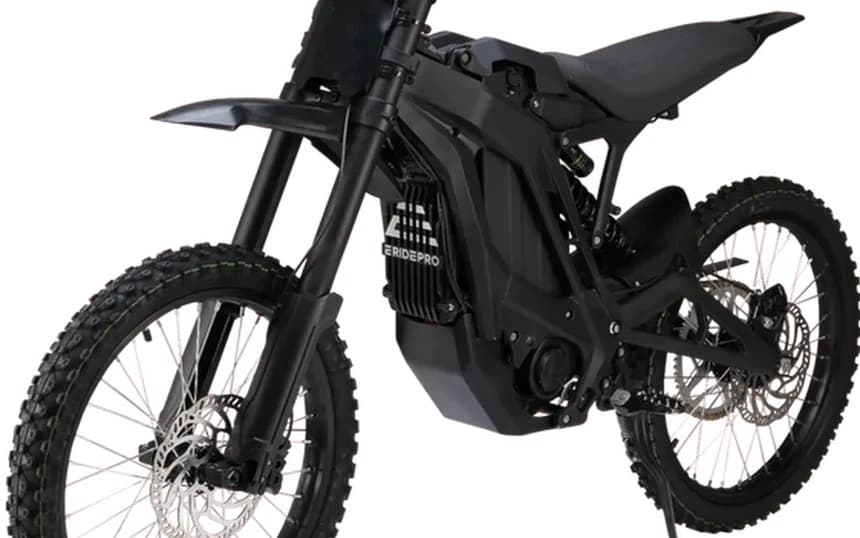
An e-bike has working pedals and is designed as pedal-assisted (with or without a throttle) — legally and functionally, it's still a bicycle. An electric dirt bike, or e-moto, is throttle-driven with no pedals at all, closer in concept to a small motorcycle built for off-road use.
Where each one is legal to ride
E-bikes generally have a clear legal path to ride on bike lanes, paths and roads, governed by the class system (see our guide to e-bike classes). Electric dirt bikes are typically off-highway vehicles, meant for private land and trail use — see our guide on street legality before assuming otherwise.
Power and speed
E-bikes are speed-limited by class, generally topping out around 20–28 mph of motor assistance. Electric dirt bikes have no such limit built in and are designed for genuine off-road performance, with power output and speed that can far exceed any e-bike class.
Weight and how each one handles at low speed
An e-bike is still fundamentally a bicycle, so you can pedal, balance and steady it at walking pace the same way you would any bike. An electric dirt bike has no pedals to help you balance at a crawl, and the added weight of a larger battery and motor makes it noticeably harder to muscle around when stopped, parking, or picking it back up after a fall. This is one reason e-bikes remain the more approachable category for casual, all-ages riding, while electric dirt bikes reward some prior two-wheeled experience.
Motors and drivetrains differ too
Most e-bikes use a hub or mid-drive motor capped at a modest wattage to stay within class rules. Electric dirt bikes typically use a mid-drive motor through a conventional chain and sprockets to multiply torque for hill climbs, with no legal power ceiling to design around — see our motor types guide for how that changes ride feel and hill-climbing ability.
Licensing and insurance differ too
Most Class 1 and Class 2 e-bikes don't require a driver's license, registration or insurance to ride on the paths and roads where they're permitted, since they're legally treated as bicycles. Electric dirt bikes carry no such blanket exemption — as off-highway vehicles, they typically need at minimum an OHV permit for trail use, and any street-legal path requires the registration, licensing and insurance any other motor vehicle would need. This is a direct consequence of the pedals-vs-throttle distinction, not a separate rule layered on top of it.
Which category fits you
If you want a bike for commuting, fitness or paved and light trail riding, you want an e-bike. If you want genuine off-road, trail or motocross-style performance on private land, you want an electric dirt bike. A rider cross-shopping a Rad Power Bikes RadExpand 5 against a Sur-Ron Light Bee X is really choosing between two different categories of vehicle, not two versions of the same thing. Browse e-bikes or electric dirt bikes to compare.
Keep reading
Next up: Throttle E-Motos vs Pedal-Assist E-MTBs: Which Fits Your Riding Style?. Or browse the full collection.