How Much Weight Can an Electric Dirt Bike Actually Carry?
2026-10-26 · 6 min read
Rider weight capacity is rarely published clearly, and it affects range, performance and suspension setup more than most buyers realize.
A question most listings dodge
Search "electric dirt bike for heavy riders" and you'll find plenty of forum threads asking the question, but very few manufacturer pages answering it directly with a number. Weight capacity isn't just about whether the frame will physically hold a rider — it changes real-world range, acceleration and how the suspension needs to be set up.
Why weight capacity isn't just a frame question
A heavier rider draws more current to achieve the same acceleration, which reduces range below the advertised figure (itself usually tested with a lighter rider). Suspension that's tuned for a 150lb test rider will feel soft and bottom out more easily under a 220lb+ rider, independent of whether the frame itself is rated to hold that weight safely.
What to actually ask before buying
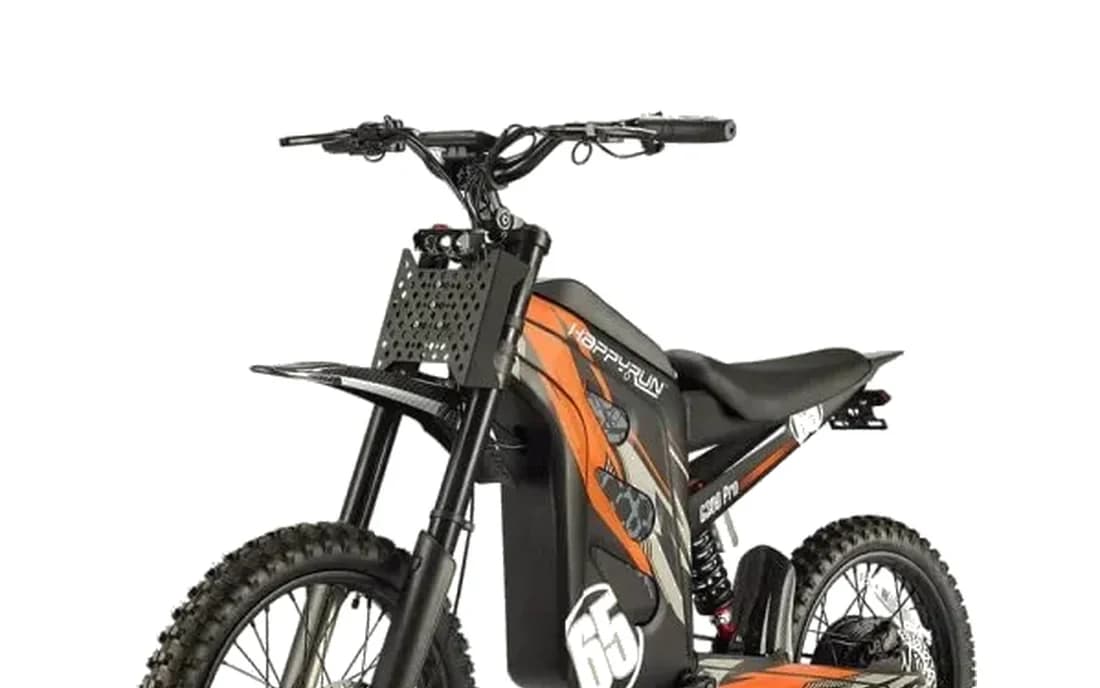
If you're over roughly 200lbs, ask specifically: what's the manufacturer-stated max rider weight, is the stock suspension tunable or does it need an aftermarket spring upgrade, and what range reduction should you realistically expect compared to the advertised number. The HappyRun G300 Pro is built with a sturdier frame and suspension setup that handles heavier riders more comfortably than some lighter-duty budget models in the same price range — our team can walk you through exact weight ratings before you order.
Suspension adjustability matters more than raw capacity
Two bikes with the same stated max weight can feel very different under a heavier rider if one has adjustable preload and compression and the other doesn't. A bike that lets you stiffen the suspension for your weight will outperform a higher-rated bike with no adjustability at all.
Off-road use, not street use
Every model here is an off-highway vehicle built for private land and trail use, not public roads. Riding street-legally means sorting out registration, insurance and licensing in your state, so plan on a helmet and full protective gear and check local OHV rules before you head out.
Keep reading
Next up: Off-Road Gear Guide: What Actually Protects You. Or browse the full collection.