How Fast Do Electric Dirt Bikes Go? Top Speed Explained
2026-08-10 · 3 min read
Top speed ranges from 15 mph on youth pit bikes to 60+ mph on flagship e-motos. Here's what actually determines how fast an electric dirt bike goes.
It depends entirely on the class of bike
There's no single answer to "how fast is an electric dirt bike," because the category spans everything from a kids' pit bike to a race-ready flagship e-moto. Top speed is set by motor power, gearing and the rider weight the bike is designed around — comparing a youth model to a full-power adult machine tells you nothing useful.
Youth and pit bikes
Entry-level and youth-focused electric dirt bikes are usually speed-limited on purpose, often topping out in the 15-25 mph range. Models like the Razor MX350 and Razor MX650 span this bracket by design, with power scaled to the age range on the label. Many let a parent set a lower cap while a young rider builds confidence, then raise the ceiling as skills improve. Speed here is a safety feature, not a limitation.
Mid-size trail e-motos
Mid-size adult e-motos built for trail and enduro riding generally reach somewhere in the 30-50 mph range, depending on battery and motor configuration. This is where most riders spend their time — enough speed for real trail riding without the weight and cost of a flagship race machine.
Flagship performance machines
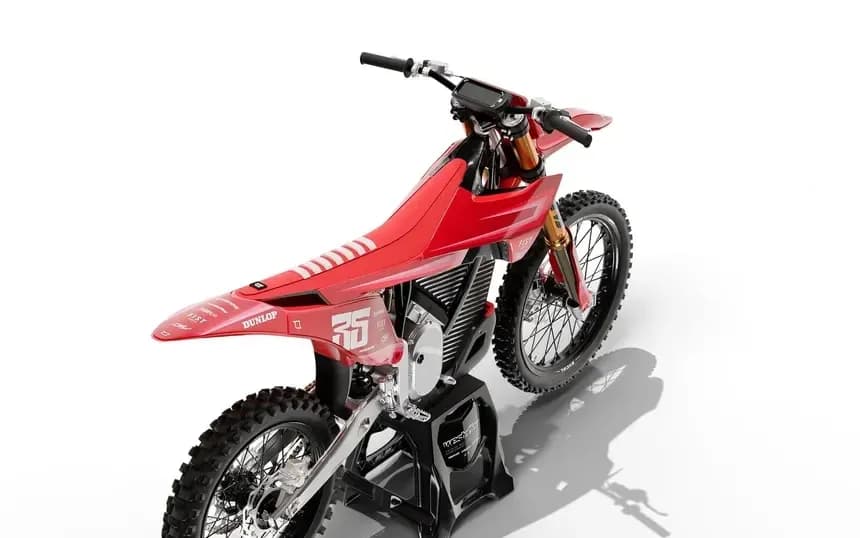
Race-oriented flagship electric dirt bikes can push well past 50 mph, with some of the most powerful models on the market approaching 60+ mph in ideal conditions. That kind of performance usually comes with a bigger battery, a more serious motor and a price to match. The Stark Varg illustrates this well: its power is fully adjustable from 10 hp up to 80 hp on the same bike, meaning the same machine can be dialed down for a controlled introduction or opened up to genuine race-level output as a rider's skill grows.
Why adjustable power matters more than a single top-speed number
A flat top-speed figure hides the fact that many higher-end electric dirt bikes let you cap output well below their maximum. That's a meaningfully different proposition than a gas bike, where detuning power usually means physical modification. Being able to soften power delivery electronically, then open it back up later without buying a new bike, is one of the more practical advantages of the category — especially for riders progressing from a mid-size machine toward flagship-level performance.
Rider weight and terrain change the real number
Manufacturer top-speed figures are typically measured under close-to-ideal conditions with a specific rider weight in mind, on flat, hard-packed ground. A heavier rider, loose or uphill terrain, and headwind all reduce the effective top speed you'll see in practice, sometimes by a meaningful margin. This is true of gas dirt bikes too, but it's worth keeping in mind specifically when comparing a spec-sheet number between two electric models, since neither figure necessarily reflects what you'll experience on your local trail.
Top speed isn't the whole story
A bike's claimed top speed rarely reflects how it actually rides on singletrack or a motocross track, where acceleration, torque delivery and handling matter more than a number on a spec sheet. Talk to our team about how you'll actually ride before choosing a bike on top speed alone. Browse our adult electric dirt bikes to compare models.
Keep reading
Next up: Electric Dirt Bike Motor Types Explained. Or browse the full collection.