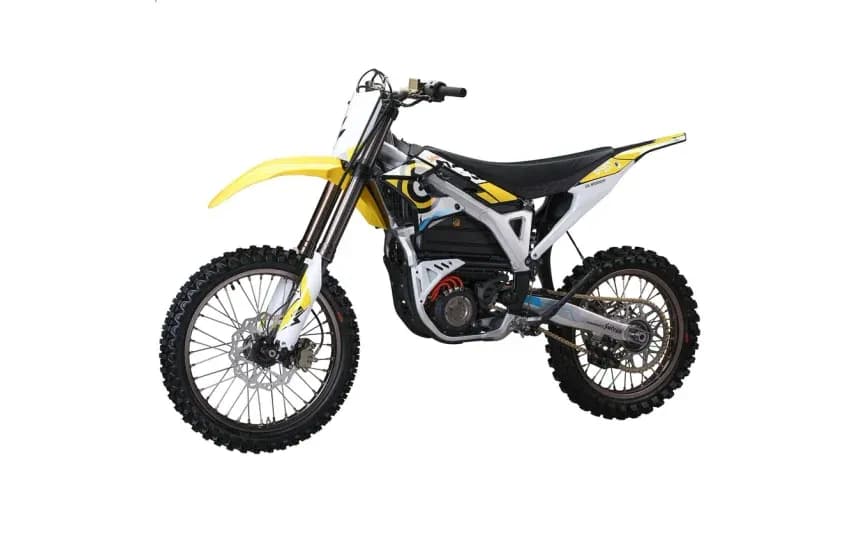
Electric Dirt Bike Watt-Hours Explained
2026-08-12 · 2 min read
Watt-hours, not voltage alone, tell you how far a battery will actually take you. Here's how to read the spec instead of guessing at range.
What a watt-hour actually measures
A watt-hour (Wh) measures total energy stored, not just power or voltage. It's calculated by multiplying a battery's voltage by its amp-hour rating — for example, a 60V battery rated at 30Ah stores 1,800Wh. The higher the watt-hour number, generally, the more energy is available for a given ride.
Voltage and amp-hours alone don't tell the story
Two batteries can share the same voltage and still store very different amounts of energy, because amp-hours vary independently. Comparing voltage alone across electric dirt bikes is misleading — always look for the watt-hour figure, or calculate it yourself, before comparing range claims between models.
Why voltage gets marketed more than watt-hours
Voltage is a single, simple-sounding number, which makes it an easy headline spec — "72V" sounds more impressive than "3,000Wh" to a shopper who hasn't done the math. But voltage on its own mostly affects how a motor controller delivers power and top-end performance, not how far the battery will carry you. A higher-voltage bike with a small amp-hour rating can have less usable range than a lower-voltage bike with a larger pack. Watt-hours cuts through that by combining both numbers into the one figure that actually predicts range.
What watt-hours means for real-world range
Watt-hours is the best single number for comparing potential range across electric dirt bikes, but actual range still depends heavily on rider weight, terrain, throttle habits and motor efficiency. Treat any manufacturer range claim as a best-case number achieved under ideal, gentle-throttle conditions.
Removable vs fixed battery packs
Some electric dirt bikes, like the KTM Freeride E-XC, use a swappable battery pack, which lets an owner keep a charged spare on hand and extend a riding day without waiting out a full charge cycle. A swappable pack also makes it easier to bring the battery indoors for storage rather than leaving the whole bike exposed to summer heat in a garage. Fixed-battery bikes trade that flexibility for a typically simpler, more integrated design.
How watt-hours relates to charge time
Charge time is roughly the battery's watt-hour rating divided by the charger's power output — a bigger battery paired with the same charger simply takes longer to fill. This is why some riders who upgrade to a higher watt-hour battery, or who add a spare pack, also look at a faster charger to keep charge times reasonable, rather than assuming charge time stays fixed regardless of pack size. It's a useful sanity check when comparing two bikes with similar watt-hour figures but different charger specifications.
Bigger isn't automatically better
A larger watt-hour battery adds range, but it also adds weight and usually cost. For trail riding close to home, a mid-size battery is often the better balance; for longer days further from a charger, prioritizing watt-hours becomes more important. See our battery care guide for how to protect that investment once you own it, and browse our electric dirt bike range to compare battery specs.
Keep reading
Next up: How to Ride an Electric Dirt Bike: A Beginner's Guide. Or browse the full collection.