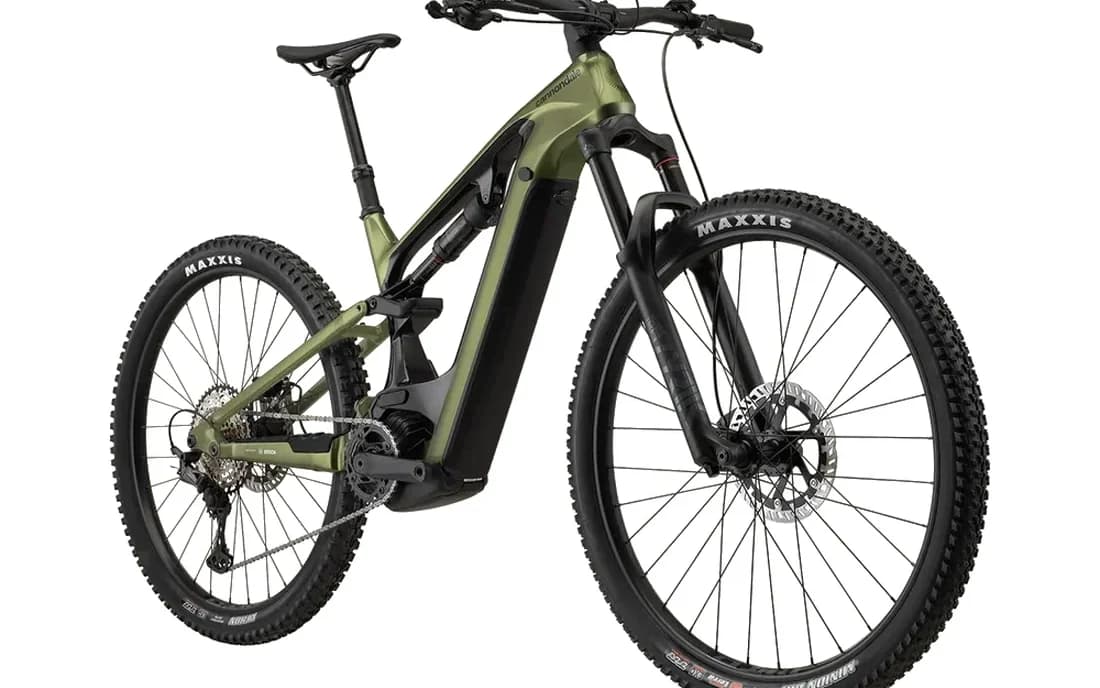
Cannondale Moterra Neo vs Trek Rail: Full-Power Trail eMTBs
2026-10-18 · 3 min read
Cannondale's Moterra Neo Carbon 1 and Trek's Rail 7 take different approaches to full-power trail eMTBs — here's how price and positioning compare.
Two approaches to full-power trail riding
Cannondale's Moterra Neo Carbon 1 sits at $8,500, the top build in Cannondale's three-model Moterra Neo family, carrying the same carbon frame as the Neo Carbon 2 but with the higher-level build kit Cannondale reserves for the flagship of that line. Trek's Rail 7, by contrast, is the entry point into Trek's own enduro-leaning Rail platform at $5,500, roughly $3,000 less, sitting below the Rail 9.8 XT ($8,500) and flagship Rail 9.9 XTR ($11,500). Both are aimed at riders who want genuine descending capability rather than the lighter, all-day feel of an SL platform, but they arrive there from different starting points within their own brand's lineup.
Where the money goes
At $8,500, the Moterra Neo Carbon 1 already represents the top of what Cannondale offers on this platform — you're getting Cannondale's best build kit on the carbon frame, not a stepping-stone model. The Rail 7 at $5,500, on the other hand, is Trek's entry point, meaning there's real room to grow within the Rail family later if you want more component spec without switching brands or platforms. That makes the pair a genuinely different decision: paying for Cannondale's flagship treatment now, or buying into Trek's Rail geometry at the accessible end and deciding later whether to move up.
Who each bike suits
The Moterra Neo Carbon 1 suits a rider who has already decided full-suspension trail eMTB riding is a long-term commitment and wants Cannondale's best version of it rather than working up to it — no compromises on build kit, just the platform's ceiling. The Rail 7 suits a rider drawn to Trek's more enduro-leaning geometry, built to hold up to harder descending than a general trail bike, but who doesn't want to commit flagship-level spending to find out if that geometry suits them. Trek built the Rail line specifically to go head-to-head with descending-focused platforms from other brands, and the Rail 7 gets you into that geometry at a meaningfully lower price than a flagship build.
Fit, ownership and what changes day to day
Full-power trail eMTBs like these two are heavier than SL-class bikes, and that weight shows up most when you're loading a bike rack or navigating tight switchbacks at walking pace, not on the trail itself where the motor does the work. Both the Moterra Neo Carbon 1 and Rail 7 are built for the kind of everyday trail riding where reliability and consistent power delivery matter more than shaving grams, and both come from brands with established service networks, which matters more with an eMTB's motor and battery system than it does with an analog mountain bike. Tire clearance, suspension travel and geometry all play into how each bike actually rides on your local trails, so it's worth thinking about the terrain you ride most before deciding on spec sheet numbers alone.
Verdict
There's no wrong answer here, just a question of where you'd rather spend: all at once on Cannondale's flagship build, or accessibly on Trek's Rail platform with room to upgrade later. Riders who know exactly what component spec they want should lean toward the Moterra Neo Carbon 1; riders who want to try Rail geometry before committing further should start with the Rail 7. Either way, both ship from Umbra Electric to the United States, Europe and worldwide, both clear our $2,000 free-shipping threshold, and both qualify for a 10% discount for BTC or USDT payment.
Keep reading
Next up: Trek Rail 7 vs Powerfly FS 9.9: Two Trek eMTB Platforms. Or browse the full collection.